Releases
Latest releases
- sbml4humans0.4.0
SBML4Humans explains itself now: the report shows what every type, column and attribute means where it is shown, and the documentation site at matthiaskoenig.github.io/sbml4humans says what SBML is, how to load a model, how to read a report and what every element type carries.
- livermetabolism-site0.11.1
A patch release fixing the alignment of the landing-page icons and closing three follow-ups from the internationalization work.
- pkpdutils1.2.0
Minor release of pkpdutils which closes the gaps a survey of the other non-compartmental analysis tools found: the parameters and rules the guidances name, acceptance criteria and exclusions, a published validation against Phoenix WinNonlin and PKNCA, the steady state completion, urinary excretion…
- sbmlsim0.7.2
A patch release of the plotting: the axis labels of a figure, an inspection of the figure model and of its matplotlib rendering, and the citation.
- libsbgnpy0.6.2
every change goes into develop through a pull request; the tests, ruff, ty and the documentation build have to pass before a merge is possible · the master branch is renamed to main, which tracks the latest published release and is fast-forwarded to the released commit by the release workflow…
- sbmlutils0.10.2
antimony 3.2.0 is excluded on Windows: its wheel raises OSError: [WinError -529697949] Windows Error 0xe06d7363 in loadAntimonyString when parsing the antimony of the repressilator model, which breaks antimony_to_sbml. Linux and macOS are not affected
- cobrapy0.32.1
fixed import failure when hopsy was not installed
- roadrunnerv2.10.0
Major new capability: variable stoichiometries.
- visfem0.1.0
first working prototype
- tellurium2.2.11.2
Small fix to SED-ML handling of files with paths. SimpleSEDML should now work on Windows.
- cy3sbmlv0.5.0
fixed deprecation issues with HTML escape · release documentation added to repository · Fix ':' in network names · Update OLS to OLS4, #353 (@kyxhik) · fixing url patterns and update http -> https, #353 (@kyxhik) · fix SBO display, #308, via #355 (@kyxhik) · examples updated (PBPK examples added)…
- pkdbv0.9.8
updated code licensing to MIT · removed travis · uv installation · updated postgres to version 18 · python update to py3.9 and pinned versions for stability
Release history
Activity
Commit activity
Stars
- Python
- C++
- HTML
- Java
- JavaScript
- TypeScript
Software

PK-DB
Pharmacokinetics database
Developed the first FAIR-compliant open database for pharmacokinetics, integrating clinical and pre-clinical trial data. PK-DB enables reproducible PBPK/PD modeling, supports individualized simulations, and has become a key infrastructure for computational pharmacology research.
v0.9.8★ 4970 open10 months agoPythonMIT



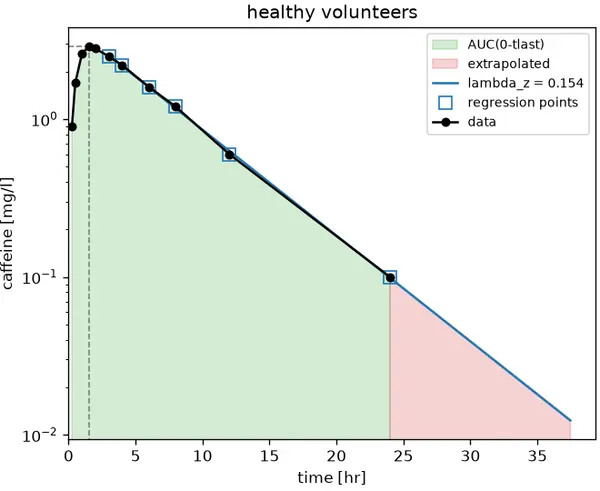
pkpdutils
PK/PD analysis in python
Developed a Python library for the pharmacokinetic and pharmacodynamic analysis of timecourses and parameters, from non-compartmental analysis and curve fitting to bioequivalence and meta-analysis. Formerly pkdb_analysis, the analysis toolbox of PK-DB.
1.2.0★ 20 openyesterdayPythonMIT


SBML4Humans
SBML simulation made easy
Designed an interactive reporting framework that makes SBML models human-readable and accessible, enabling experts and newcomers to explore model content without technical barriers.
0.4.0★ 013 opentodayTypeScriptMIT


cysbml
Cytoscape 3 app for the Systems Biology Markup Language
Developed and maintained a widely used Cytoscape app for visualization of SBML models in network contexts. cy3sbml has facilitated intuitive exploration of complex models in systems biology and bioinformatics.
v0.5.0★ 1515 open7 months agoJava



roadrunner
High-performance simulator for SBML
Contributed to the development of libRoadRunner, a C/C++ library using LLVM for ultra-fast simulation of SBML models, setting a benchmark for performance in computational biology.
v2.10.0★ 6281 open2 weeks agoC++


tellurium
systems biology simulation library
Co-developed Tellurium, a Python-based environment for reproducible dynamical modeling of biological networks. Integrated standard formats with powerful simulation libraries, enabling accessible and transparent modeling.
2.2.11.2★ 146133 open3 weeks agoPythonApache-2.0
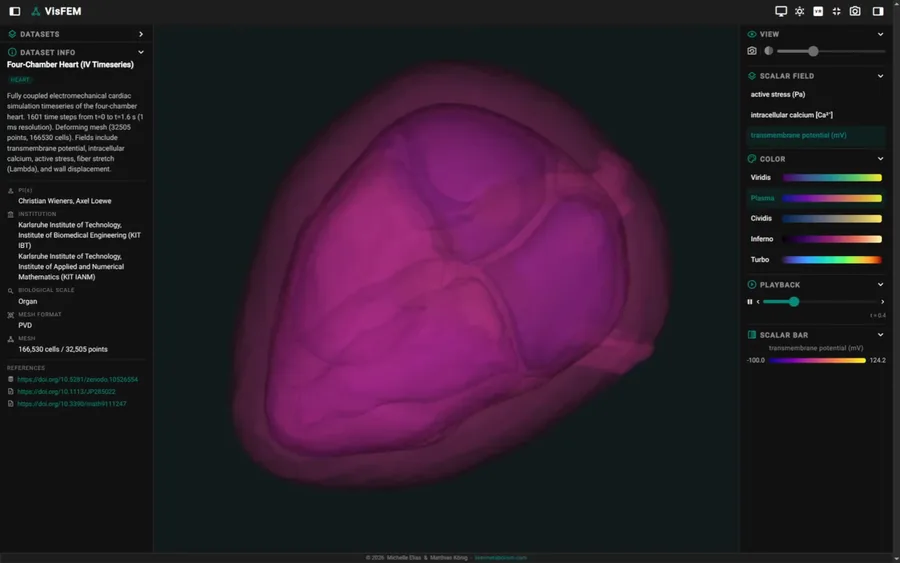
VisFEM
Web visualization of FEM models
A browser-based visualization tool for finite element method (FEM) simulation results, making FEM-based digital twin models interactively explorable and shareable directly from the web to lower the barrier to reproducible computational modeling.
0.1.0★ 10 open2 weeks agoPythonMIT

livermetabolism.com
Source of this website
The complete source of this website, with all research data (publications, people, projects, software, teaching) maintained as open YAML tables and built into a static site.
0.11.1★ 25 opentodayTypeScript
Nothing in this research area yet.
Data from GitHub, updated .
Funding

X-Student Research Group - Digital Twins in Action: Optimizing Direct Oral Anticoagulant Use
BMFTR, Recipient, 10/2025–04/2026
Project-based teaching initiative on digital twins in medicine, focusing on physiologically based pharmacokinetic (PBPK) modeling to optimize the use of direct oral anticoagulants.


AlgoNomy - Algorithmic Regulation Before Medical Liability - Advancing Doctor-Patient Autonomy in AI-Driven Healthcare
Circle U., Co-Investigator, 2024–2025
Building an international academic network to investigate the role of algorithms and AI in medical decision support systems, with a focus on legal, ethical, and patient autonomy implications.
X-Student Research Group - Physiologically based digital twins for the treatment of hypertension with ACE inhibitors and diuretics
BMFTR, Recipient, 04/2023–09/2023
Project-based teaching initiative on digital twins in pharmacology, focusing on physiologically based pharmacokinetic (PBPK) modeling to optimize hypertension therapy with ACE inhibitors and diuretics.

X-Student Research Group - Physiologically based modeling of drugs: ACE inhibitors in the treatment of high blood pressure
BMFTR, Recipient, 10/2022–03/2023
Project-based teaching initiative on physiologically based pharmacokinetic (PBPK) modeling, focusing on optimizing the use of ACE inhibitors in hypertension therapy.
FOR5151 - QuaLiPerF - Quantifying Liver Perfusion-Function Relationship in Complex Resection – A Systems Medicine Approach
DFG, Recipient, 07/2021–11/2025
Advancing systems medicine by developing computational models to quantify the relationship between liver perfusion and function in complex surgical resections, supporting risk assessment and personalized treatment planning.

EOSC-Life - Reproducible simulation studies targeting COVID-19
EOSC-life, Recipient, 06/2020–05/2021
Developed reproducible computational simulation studies to investigate COVID-19 dynamics, integrating standardized workflows and open science practices for rapid and transparent research dissemination.
LiSyM - Systems Medicine of the Liver - Junior group leader - Multi-scale models for the personalized evaluation of liver function
BMFTR, Recipient, 06/2016–05/2022
Led a junior research group developing multi-scale computational models to assess and predict liver function, advancing personalized medicine approaches and translational applications in hepatology.
Nothing in this research area yet.
This work was supported by the BMFTR-funded de.NBI Cloud within the German Network for Bioinformatics Infrastructure (de.NBI) (031A537B, 031A533A, 031A538A, 031A533B, 031A535A, 031A537C, 031A534A, 031A532B).
Editors
We are actively involved in the standardization and reproducibility efforts in Systems Biology and Systems Medicine.




Nothing in this research area yet.